
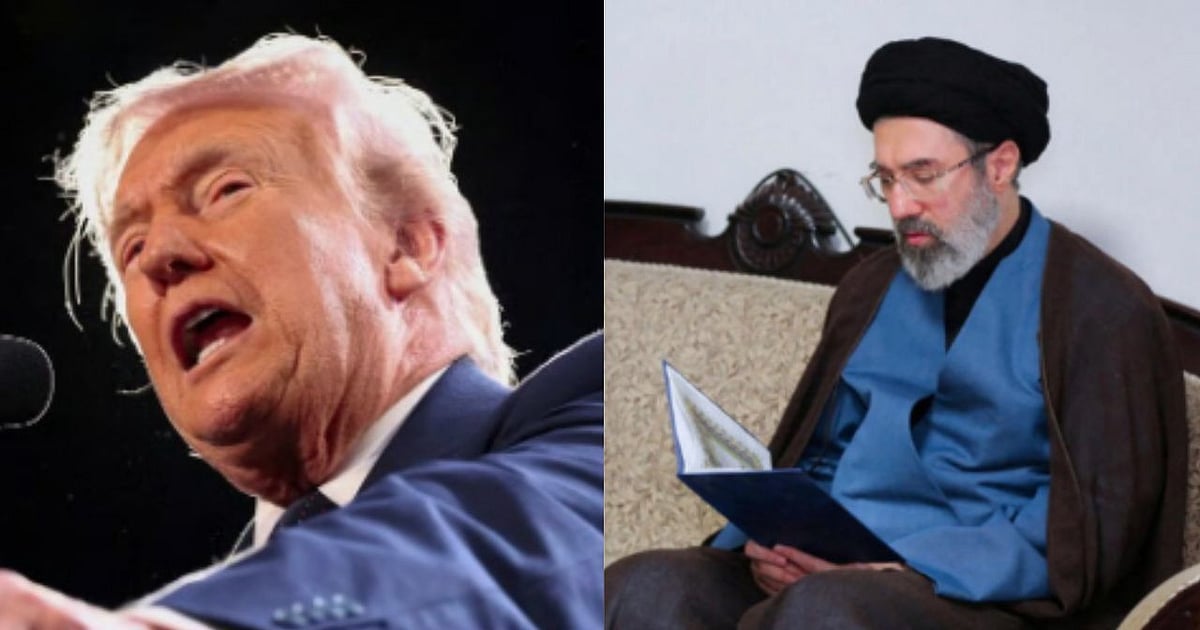
Iran's Stance on the War with the US and Israel
The Islamic Revolutionary Guard Corps (IRGC) has responded to Donald Trump's recent remark on a potential conflict with Iran, stating that the country will determine when the war ends. This comes amidst rising tensions between Iran, the US, and Israel over oil flows in the Strait of Hormuz. In a statement, the IRGC said that Iran will not back down and will decide when the war ends, sending a strong message to its adversaries. Strait of Hormuz: A Critical Waterway The Strait of Hormuz is a vital waterway that connects the Persian Gulf to the Gulf of Oman, and it is a critical route for oil exports from the region. The strait is bordered by Iran to the north and the United Arab Emirates and Oman to the south. Any disruption to oil flows through the strait could have significant implications for the global economy, and it is this that has led to increased tensions between Iran and the US.Donald Trump's Warning
Earlier, Donald Trump had warned Iran that any attempt to disrupt oil flows through the Strait of Hormuz would be met with a strong response from the US. Trump said that a conflict with Iran would be "short-lived," but Iran has responded by saying that it will determine when the war ends. The IRGC statement is a clear indication that Iran is not afraid of a conflict with the US and is prepared to defend its interests.- The Strait of Hormuz is a critical waterway for oil exports from the region.
- Any disruption to oil flows through the strait could have significant implications for the global economy.
- Iran has responded to Donald Trump's warning by saying that it will determine when the war ends.
- The IRGC statement is a clear indication that Iran is not afraid of a conflict with the US.
- The situation in the region remains volatile, with markets swinging in response to the latest developments.
Mojtaba Khamenei Becomes Supreme Leader
In a related development, Mojtaba Khamenei has become the supreme leader of Iran, replacing his father, Ali Khamenei. This move is expected to have significant implications for the country's foreign policy, including its relations with the US and Israel. Mojtaba Khamenei is known for his hardline stance, and his appointment is likely to further escalate tensions in the region. Vladimir Putin's Diplomatic Efforts Meanwhile, Russian President Vladimir Putin is pushing for a diplomatic solution to the crisis. Putin has been in touch with leaders from the region, including Iran and the US, and is urging them to find a peaceful resolution to the conflict. Putin's efforts are seen as a positive development, and they may help to reduce tensions in the region.Markets React to the Latest Developments
The situation in the region remains volatile, with markets swinging in response to the latest developments. The price of oil has risen in recent days, and it is likely to remain high as long as tensions in the region persist. The global economy is also likely to be affected, and it is crucial that a peaceful resolution is found to the conflict as soon as possible. In conclusion, the situation in the region remains critical, with Iran, the US, and Israel locked in a standoff over oil flows in the Strait of Hormuz. The IRGC statement that Iran will determine when the war ends is a clear indication that the country is not afraid of a conflict, and it is prepared to defend its interests. The appointment of Mojtaba Khamenei as supreme leader is likely to further escalate tensions, while Vladimir Putin's diplomatic efforts may help to find a peaceful resolution to the crisis.Stay tuned to Newsvibe724 for more updates.



0 Comments